What if yoga meant technology, jihad or sex with multiple partners? 😳
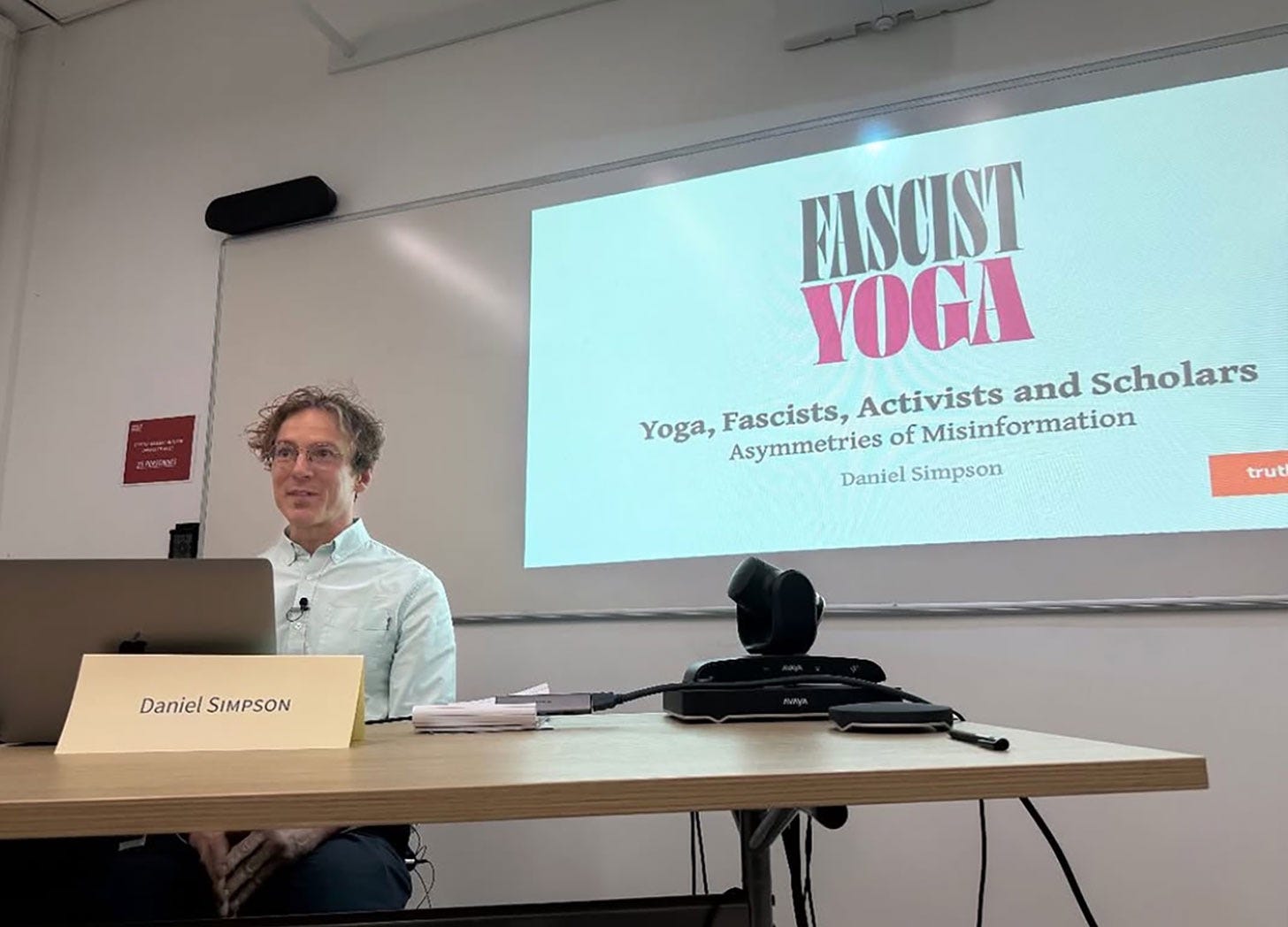
That’s just a sample of the thought-provoking papers presented in Paris at the Yoga Darśana Yoga Sādhanaconference last week. This podcast shares a few reflections on what was discussed, plus my own presentation on misleading books that manipulate readers to generate sales (slides available here).
Presenting in Paris (May 29, 2026)
Expanding on a range of conversations across other panels, I also outline some possible responses to broader concerns about misinformation. In the process, I consider ways to bridge gaps between scholars, yoga teachers and practitioners, journalists, activists and the general public.
Recordings of some keynote presentations will be uploaded here via the YouTube channel of the SOAS Centre of Yoga Studies. I also referenced a talk about fascist yogis by Emily Ward, which is available here. Meanwhile, my critical reviews of Shyam Ranganathan’s and Stewart Home’s books are here and here.
And here’s the abstract for my talk, which I shared in advance:
Scholarly research on yoga is now widely accessible. Open-access publishing, online courses, podcasts and talks have helped to share its findings with a broad general audience. Yet contemporary practitioners still harbour misconceptions about yoga history, while some popular authors misrepresent scholarship to bolster their arguments. Two recent examples make interesting case studies. Stewart Home’s “Fascist Yoga” and Shyam Ranganathan’s “Yoga – Anticolonial Philosophy” both distort the work of prominent researchers, attacking and insulting them into the bargain. This enables the writers to advance interpretations that historical evidence fails to support, which they nonetheless present as telling awkward truths.
Both men regard themselves as activists, respectively promoting resistance to far-right politics and colonialist thinking within academia. However, what they say about philosophy and history misleads readers about basic facts, undermining their advocacy. Since neither book emerged from research that had been peer-reviewed, this manipulative framing went unchallenged. In any case, most scholars have better things to do than police tendentious writing that targets the public. As James Mallinson argued on the RISA list in 2016, “there are a lot of unfounded claims about yoga on the internet and one could spend a lifetime refuting them”.
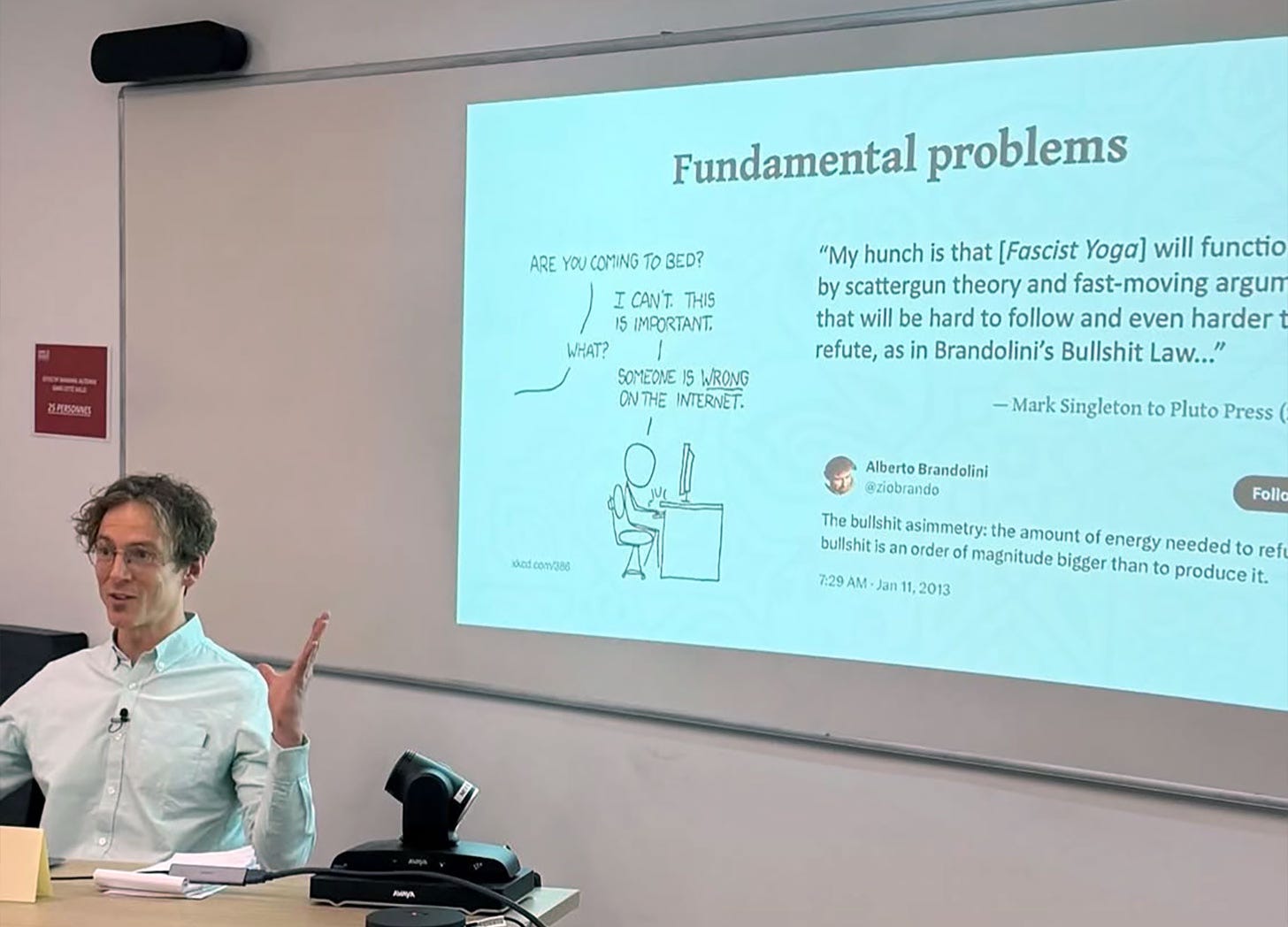
The “bullshit asymmetry” problem
Mindful of the principles of Brandolini’s Law (which states that fallacies take less effort to produce than refute), this paper reflects on attempts to correct deceptive arguments. In the process, it raises questions about engagement with practitioners, the media and other potential channels to disseminate reliable information.
The next YDYS conference will be held in Finland in 2028. To stay informed about plans, join the mailing list here at yogaresearch.org, where you can also find resources from scholars. For more on the topic from me, see this earlier episode.