
Namaste and Yoga
Who decides what's appropriate and why?

Controversies in yoga have often been harrowing, from injurious methods to guru abuses. But few have been as strange as the hand-wringing anguish about namaste.
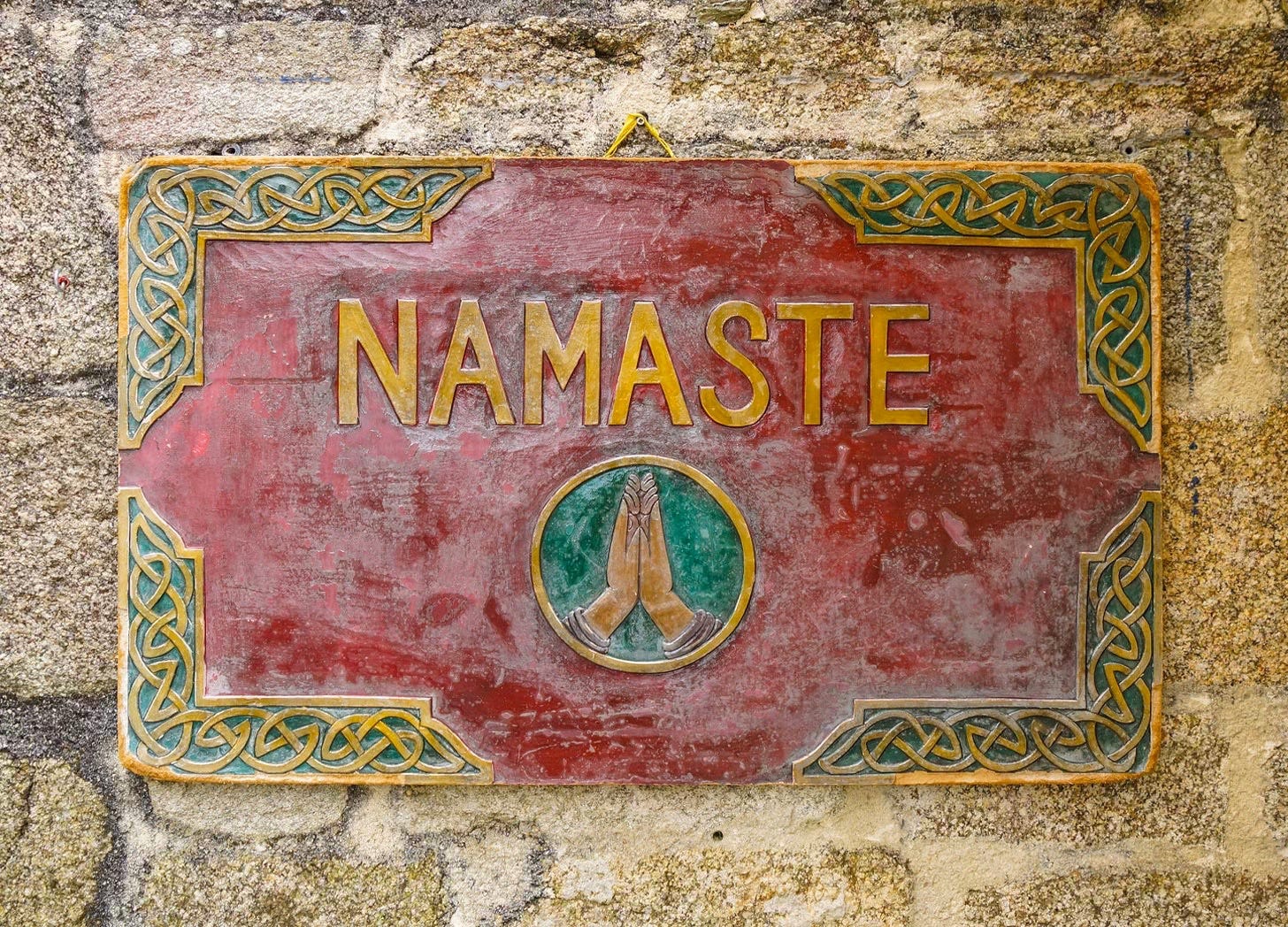
The question of whether to utter this polite salutation has vexed academics, teachers and influencers, with the balance of opinion against – at least in vocal expressions on social media. Sources of concern include some cringeworthy puns, such as “namastay in bed”, or branding tough practices “namaslay”. Flowery definitions are also derided, particularly “the divine light in me bows to the divine light within you”.
In Sanskrit, namaste is simpler. It combines two words – namaḥ, a noun meaning “bow”, and te, a dative form of the second person singular pronoun. So it really just means “reverence to you”. Addressing a group, using the plural pronoun, it should in theory be namo vaḥ. However, modern classes often end with namaste.
This causes consternation, particularly among Indians who live in north America. In modern Hindi usage, namaste is a formal greeting, which can sound a bit grating as a spiritual signoff to what might otherwise be seen as a workout. To quote the scholar of religion Liz Bucar, who also teaches yoga:
“I never say namaste—not because Sanskrit is off-limits, but because I understand how that particular bit of fake liturgy lands for South Asian Americans. I learned this from yoga scholar Rumya Putcha, who describes strategically coughing during the namaste closing at her studio—a small act of resistance against appropriation masquerading as reverence.”
Why is it appropriative to say namaste? Teachers in India do it routinely, often at the end of identical classes (here’s a random example). Effectively, namaste functions like ciao to mean “hello” and “goodbye”. The alternative term namaskār, from the Sanskrit for “homage”, is equally common. Neither is all that reverent – Indian academics write namaste in emails, while namaskār is synonymous with postures thanks to the ubiquity of “sun salutations” (i.e. sūrya-namaskār) in contemporary yoga.
In any case, the reverence may be authentic, as another scholar – Stuart Sarbacker – explores in an analysis of links between postural contortions and ancient veneration of deities and gurus. “Even performing namaskār or añjali-mudrā [joining palms at the sternum] while speaking the greeting namaste taps into the notion of the relationship between the human and divine,” Sarbacker writes.
Namaste is used in this way in Indian texts from the Vedas and Upaniṣads to more recent compilations of physical yoga techniques. For example, the Ṛg Veda (8.75.10) says namaste agna ojase, saluting the power of the divinised fire that receives ritual offerings. And the Taittirīya Upaniṣad (1.1 and 1.12) repeatedly says namaste vāyo, paying homage to the wind, which is linked to the breath in yogic teachings.
Influential treatises, such as the Yogavāsiṣṭha and the Jñāneśvarī, say namaste, as does Abhinavagupta’s commentary on the Bhagavad Gītā. It also appears in compendia that shape postural practice, from the Yogacintāmaṇi to the Śrītattvanidhi, which was cited as a reference by T. Krishnamacharya – the pioneering teacher of modern yoga gurus such as B. K .S. Iyengar and K. Pattabhi Jois. And Brahmānanda’s nineteenth-century Jyotsnā on the Haṭhapradīpikā says namaste to Śiva as lord of yoga.
None of which obliges anyone to use the word today, of course. But it’s clearly not anomalous in yogic contexts – it’s more a question of how traditional contexts relate to modern practices. Back in 2017, shortly after publication of Roots of Yoga, one of the book’s co-authors, James Mallinson, observed: “globalised yoga traditions in the West have become very much divorced from those roots”.
Taken literally, this statement oversimplifies a complex evolutionary process. Citing some of the sources listed above, the scholars Jason Birch and Jacqueline Hargreaves note that “collections of complex āsanas that were practised by yogis in the 18th and 19th centuries contributed significantly to the formation of modern postural yoga”.
Meanwhile, the shift towards practice for health and wellbeing – as opposed to the original aim of liberation from rebirth – started in India before yoga globalised. This is nowadays endorsed by a government ministry, while the prime minister encourages citizens to “Keep practising Yoga for a #FitIndia!”
The furore around namaste is a proxy discussion about broader issues of authenticity, cultural ownership and respectful engagement with foreign traditions. These sorts of questions have no simple answers, though attempts to provide them are rife. Many are presented by diaspora South Asians promising to “decolonise your yoga practice” and “embrace yoga’s roots”. However, some come with pitfalls.
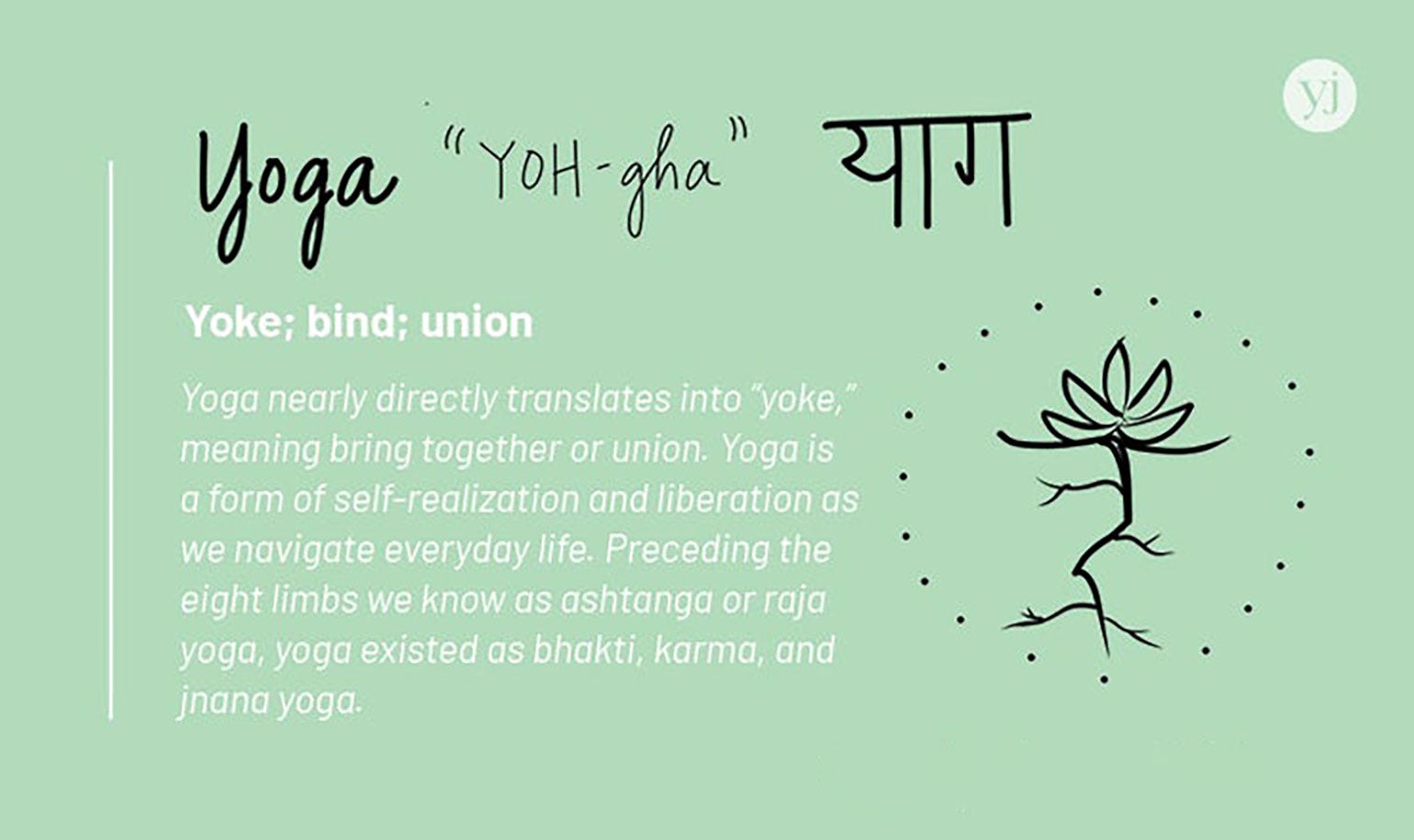
In 2021, Yoga Journal ran a feature originally titled “40 Sanskrit Words Every Yogi Should Know”. It was written by an Indian American and riddled with errors. Among the many words it misspelled in devanāgarī script were ahiṃsā (non-harming), avidyā (ignorance), prajñā (wisdom), and yoga. This may have been the product of knowing a modern South Asian language – and its use of devanāgarī – better than Sanskrit. But the author’s ethnicity provided authority, and editors seemed none the wiser.
It can nonetheless be helpful to learn about history. That might involve reflecting on the influence of colonialism on modern postural methods, and the echoes of imperial arrogance in decontextualised commodification of techniques. As a blogger wrote in 2019, after listening to a podcast that provided food for thought: “I’m still ending my classes with ‘namaste’ [but] it’s important to know why you do what you do.”
For a comprehensive overview of yoga’s evolution, and how traditional ideas relate to modern applications, join me online for The Path of Knowledge. A new intake will be opening soon – sign up now to hear first about early-bird rates. I also run discussions on yoga philosophy, along with shorter courses on yogic texts at truthofyoga.com.
If you’d like to support Ancient Futures, please consider paying to subscribe or send me fuel…